Best Self Propelled Lawn Mower for Beginners

Six self-propelled mowers, compared on the specs that matter to a first-time buyer: weight, cutting width, drive type and what you maintain.

By Taylor MontgomeryUpdated 15 min read
On this page
- Best self propelled lawn mower for beginners at a glance
- How I screened these six mowers
- 1. PowerSmart 22-Inch Self Propelled Gas Lawn Mower — Best overall
- 2. PowerSmart 21" Self-Propelled Gas Lawn Mower — Best minimal setup
- 3. Greenworks 60V 21in Self-Propelled Lawn Mower — Best premium
- 4. Greenworks 80V 21in Self-Propelled Lawn Mower — Best for pros
- 5. KraftSense 18-Inch 40V Max Brushless Cordless — Best budget pick
- 6. SENIX 201cc 22" 3-in-1 Variable Speed Self Propelled Gas — Best large-capacity
- Gas or battery: which is easier to start with?
- What does self-propelled actually change?
- Weight and storage: what fits your shed?
- What to skip and what to spend on
- The verdict
- FAQ
The best self propelled lawn mower for beginners is the PowerSmart 22-Inch Self Propelled Gas Lawn Mower, because its 170cc engine and 22-inch steel deck cover a medium yard fast while the rear-wheel drive pulls itself uphill. If you never want to deal with gas or oil, the Greenworks 60V 21in Self-Propelled Lawn Mower is the better start, shipping with two 4.0 Ah batteries and a 4-year warranty. Here is the 30-second version: gas power for bigger lawns, battery for quiet and no maintenance, and something light if storage or lifting is your limit.
Best self propelled lawn mower for beginners at a glance
| Pick | Power | Cut width | Price |
|---|---|---|---|
Best overall PowerSmart 22-Inch Self Propelled Gas Lawn Mower |
170cc gas | 22 in | Check Price |
Best minimal setup PowerSmart 21" Self-Propelled Gas Lawn Mower |
170cc gas | 21 in | Check Price |
Best premium Greenworks 60V 21in Self-Propelled Lawn Mower |
60V battery 2 x 4.0 Ah |
21 in | Check Price |
Best for pros Greenworks 80V 21in Self-Propelled Lawn Mower |
80V battery 4.0 Ah |
21 in | Check Price |
Best budget pick KraftSense 18-Inch 40V Max Brushless Cordless |
40V battery 4.0 Ah |
18 in | Check Price |
Best large-capacity SENIX 201cc 22" 3-in-1 Variable Speed Self Propelled Gas |
201cc gas | 22 in | Check Price |



How I screened these six mowers
I compared the published specifications side by side before writing a word. That means weight, cutting width, engine size or battery voltage, warranty, and how many modes each deck offers. Nothing here is a hands-on measurement. It is what the listings state, lined up so you can see where the picks actually differ.
A word on the search term first. Amazon's results for a "beginner" mower do not carry a beginner rating, so none of these is certified as easy to learn. I treated "beginner-friendly" as a judgment I make from the specs, not a promise the box makes. What matters to a first-timer:
- Weight, because you will tilt and clean it. These range from 28.5 lb to 79 lb.
- Fuel type, because gas means oil changes and battery means charging.
- Cut width, because a wider deck finishes faster but is bulkier to store.
Here is what I cut. I ignored anything without a stated drive type, since self-propelled is the whole point. I dropped any pick where the core specs were too thin to compare fairly on power. What survived are six mowers with clear numbers on the fields a new owner actually weighs. Each one earns its place for a different lawn.
1. PowerSmart 22-Inch Self Propelled Gas Lawn Mower — Best overall
The widest gas cut in this set paired with a mid price makes it the safest all-round first mower.
Best for: a first mower on a medium yard with some slope Skip it if: you never want to touch gas or oil
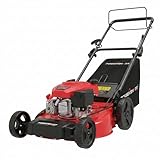
This is the balanced pick because it does not force a compromise. The 170cc 4-cycle OHV engine matches the smaller PowerSmart on power, but the deck stretches to 22 in, tying the widest cut here. PowerSmart says the auto choke and recoil start make starting simple, which is the part that scares off new gas owners. It weighs 68 lb, lighter than either gas rival with a comparable deck.
The 3-in-1 system covers mulch, rear bag and rear discharge, so you can change your mind as the season changes. Height adjusts from 1.5 in to 3.9 in across six settings. PowerSmart says the rear-wheel drive holds traction on slopes, which is where a self-propelled mower earns its keep.
The trade-off is maintenance. Unlike the battery picks, you own oil changes and fuel storage, and there is no published warranty here. Against the SENIX gas mower it gives up engine displacement, and against the Greenworks pair it gives up quiet running. For most first lawns, that is a fair swap.
Pros:
- 22-inch deck, tied widest in this set
- 68 lb, lightest of the gas mowers here
- 170cc OHV engine with auto choke, per PowerSmart
- 3-in-1 mulch, bag and rear discharge
- Six heights from 1.5 in to 3.9 in
Cons:
- No warranty stated in the listing
- Gas means oil changes and fuel storage
- Less engine displacement than the SENIX
- Only one seller lists it
2. PowerSmart 21" Self-Propelled Gas Lawn Mower — Best minimal setup
The most compact box here on the second-cheapest price, for a smaller lawn you want running with the least fuss.
Best for: a smaller flat lawn and the lightest possible box to assemble Skip it if: you want a wider cut to finish faster
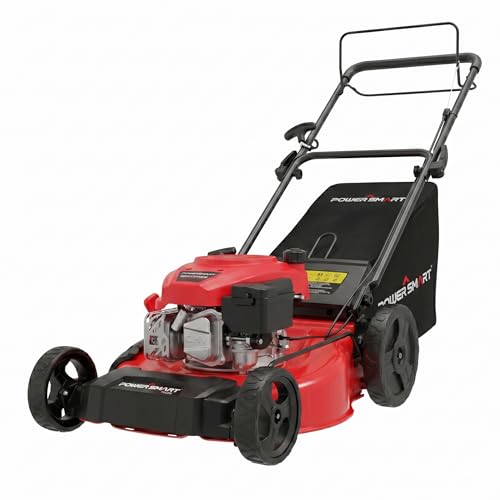
This is the pared-down sibling of the winner. Same 170cc OHV engine per PowerSmart, but a 21-inch steel deck and a smaller stated footprint of 22.6 x 32.9 x 16.5 in. It is the second-cheapest pick of the six, so it is where a tight budget meets gas power. The listing describes a single-lever height adjuster running 1.5 in to 3.9 in across six positions, which is the easiest kind to learn on.
The 3-in-1 setup collects into a 1.4-bushel bag, mulches, or rear-discharges. PowerSmart says the 10-inch rear wheels give traction on slopes and uneven ground. For a new owner on a modest plot, this is close to the least you have to think about while still getting drive assist.
The catch is thin published data. Weight is not listed, so I cannot tell you how heavy it is to tilt, and the deck loses an inch of cut to the winner. There is no stated warranty either. It trades finishing speed and detail specs for a lower price and a smaller frame.
Pros:
- Second-cheapest pick in this set
- Compact stated footprint for tight storage
- 170cc OHV engine, per PowerSmart
- Single-lever six-position height control
- 1.4-bushel bag plus mulch and discharge
Cons:
- No published weight figure
- One inch narrower cut than the winner
- No warranty stated
- Only one seller lists it
3. Greenworks 60V 21in Self-Propelled Lawn Mower — Best premium
Two batteries in the box and a 4-year warranty make this the lowest-worry entry into battery mowing.

Best for: a buyer who wants two batteries and a long warranty from day one Skip it if: you want the lowest price in this set
If your reason for going self-propelled is to avoid the mess of gas, this is the cleanest way in. It ships with two 4.0 Ah batteries, so one charges while the other cuts. The 60V brushless motor drives a 21-inch deck, and Greenworks claims it runs 3x quieter than gas with zero emissions. At 65 lb it is lighter than the 80V Greenworks and the gas SENIX.
The 4-year limited warranty on tool and battery is the longest stated here, and it is one of only two picks with any warranty at all. Greenworks lists a 4-in-1 head covering mulch, bag, side discharge and turbo leaf pickup, plus an LED headlight for low light. The battery also fits 75+ Greenworks 60V tools, which matters if you buy more.
This is the most expensive pick here, and it sells faster than the rest of this set. The cost is the trade-off: you pay a premium for the second battery and the warranty. There is no engine to service, but you do manage charging and battery life instead.
Pros:
- Ships with two 4.0 Ah batteries
- 4-year warranty, longest stated here
- 65 lb, lighter than the 80V and SENIX
- Quiet and zero-emission, per Greenworks
- Fits 75+ Greenworks 60V tools
Cons:
- The most expensive pick in this set
- Runtime depends on battery, no acreage stated
- Charging replaces refueling, not a fix for everyone
- Only one seller lists it
4. Greenworks 80V 21in Self-Propelled Lawn Mower — Best for pros
The most torque of the battery picks and a stated half-acre reach, for a bigger cordless lawn.

Best for: up to half an acre and the most torque of the battery picks Skip it if: you dislike storing a 75 lb machine
This is the battery pick for someone with more grass than the 60V is meant for. Greenworks says the 80V system cuts up to half an acre on a full 4.0 Ah charge and that the brushless motor delivers more torque than lower-voltage motors. Released in 2024, it is the newest mower here. The 21-inch steel deck matches the 60V, but the higher voltage is the reason to step up.
Variable speed control lets you set your walking pace, and the LED headlight covers early or late mowing. Greenworks lists the same 4-year limited warranty as the 60V. For a beginner with a large lawn who still wants no oil changes, this is the practical ceiling in this group.
Two things count against it. It weighs 75 lb, heavier than the 60V's 65 lb, and it ships with a single battery rather than two, so there is no hot-swap out of the box. It is the second-most-expensive pick. You get more range and torque, but you carry more weight and manage a single pack.
Pros:
- 80V system, most torque of the battery picks
- Cuts up to half an acre per charge, per Greenworks
- Newest model here, released 2024
- 4-year warranty on tool and battery
- Variable speed and LED headlight
Cons:
- 75 lb, heaviest battery pick here
- Ships with only one battery
- Second-most-expensive pick in this set
- Only one seller lists it
5. KraftSense 18-Inch 40V Max Brushless Cordless — Best budget pick
The lightest and cheapest mower here, built for a tiny flat lawn and easy lifting.

Best for: a tiny flat lawn and the lightest lift onto a workbench Skip it if: your yard runs long or you mow more than 30 minutes at a time
The number that sets this apart is 28.5 lb. That is less than half the weight of every gas mower here, which changes tilting, storing and hauling it up steps. It is also the cheapest pick of the six. The 40V Max system uses a 148Wh battery, and KraftSense lists a brushless motor spinning up to 3,600 RPM behind an 18-inch deck.
Drive speed is adjustable from 1.3 to 2.9 mph, so you can slow down while you learn. KraftSense says it covers up to 1/8 acre and runs up to 30 minutes per charge. It carries a 3-year tool and 1-year battery warranty, and two sellers stock it, the only pick here with more than one.
The limits are real. The 18-inch deck is the narrowest in this set, so it takes more passes, and the cutting height tops out at 3.0 in, lower than the gas picks' 3.9 in. It also offers 2-in-1 mowing, not the 3-in-1 the others give. This is a small-lawn tool, and it trades reach and top height for portability and price.
Pros:
- 28.5 lb, by far the lightest pick here
- Cheapest of the six
- 3,600 RPM brushless motor, per KraftSense
- Adjustable 1.3 to 2.9 mph drive speed
- Two sellers stock it
Cons:
- 18-inch deck, narrowest in this set
- Height tops out at 3.0 in
- Only 2-in-1, no side discharge
- Up to 30-minute runtime, per the listing
6. SENIX 201cc 22" 3-in-1 Variable Speed Self Propelled Gas — Best large-capacity
The biggest engine here on a 22-inch deck, for a larger open lawn you want done in fewer passes.

Best for: the widest gas cut here on a bigger open lawn Skip it if: storage is tight or you dislike lifting a 79 lb mower
For raw gas power, this leads the set. The 201cc 4-cycle OHV engine is the largest displacement of the six, and it pairs with a 22-inch steel deck, tying the widest cut here. SENIX says the 11-inch rear wheels give the tallest wheels in this group, which helps roll over rough or uneven ground. Variable speed drive lets you match your pace as you go.
The 3-in-1 system covers bagging, mulching and side discharge, and a single-lever adjuster sets six heights. For a beginner with a big, open lawn and no interest in charging batteries, the extra engine and traction shorten the job.
The reasons to pause are weight and storage. At 79 lb it is the heaviest mower here, so tilting and moving it takes real effort. There is no published warranty. It also sells slower than most of this set and lists one seller. Against the winner, it gives up nothing on cut width and gains engine size, but it costs more, weighs more, and skips the rear-discharge mode the PowerSmart offers.
Pros:
- 201cc engine, largest displacement here
- 22-inch deck, tied widest cut
- 11-inch rear wheels, tallest in this set
- Variable speed self-propelled drive
- Single-lever six-position height control
Cons:
- 79 lb, heaviest mower here
- No warranty stated
- Costs more than the winner for a similar cut
- Only one seller lists it
Gas or battery: which is easier to start with?
This is the fork every new buyer hits, and neither answer is wrong. It comes down to what you would rather manage.
Gas means more power on tap and no waiting to recharge. The PowerSmart pair and the SENIX all use 170cc or 201cc OHV engines and finish larger lawns without a pause. The cost is upkeep: oil changes, fuel storage and a pull start. None of the three gas picks lists a warranty.
Battery means you skip all of that. Greenworks says its mowers run 3x quieter than gas with zero emissions, and there is no oil to change. The 60V ships with two 4.0 Ah batteries, and both Greenworks mowers carry a 4-year warranty. The trade is runtime: the KraftSense states up to 30 minutes per charge, and the Greenworks pair depend on battery capacity too.
If your lawn is small and flat, battery is the lower-effort start. If it is bigger or you would rather refuel than recharge, gas keeps you moving. The winner is gas because it splits the difference on price and weight, but a battery mower is the easier machine to live with day to day.
What does self-propelled actually change?
Self-propelled means the mower drives its own wheels, so you steer instead of push. Every pick here is rear-wheel drive, which is the layout that grips best on slopes because weight shifts to the back wheels when you climb.
Here is what changes for a beginner, in order of how much you will notice it:
- Slopes get easier. PowerSmart and Greenworks both cite rear-wheel traction as the reason. On a flat lawn you feel it less.
- Pace control matters. The SENIX, the KraftSense and the 80V Greenworks list variable speed, so you set how fast the mower pulls you. The KraftSense states a 1.3 to 2.9 mph range.
- You still lift it. Drive assist does nothing when you tilt the mower to clean the deck, which is where the 28.5 lb KraftSense beats the 79 lb SENIX.
Self-propelled is worth it for most lawns with any grade. On a small, flat plot, a lighter push mower would do, but every pick here assumes you want the wheels doing the work.
Weight and storage: what fits your shed?
Weight is the spec new owners underrate most. You lift and tilt a mower far more than you expect, and a heavy one lives in the corner of the garage that is hardest to reach.
The spread here is wide:
- KraftSense: 28.5 lb, the featherweight, easy to lift onto a bench
- Greenworks 60V: 65 lb
- PowerSmart 22-inch: 68 lb
- Greenworks 80V: 75 lb
- SENIX: 79 lb, the heaviest
The KraftSense also has the narrowest 18-inch deck and a compact 18.4 x 43.8 x 45.5 in frame, so it stores small. The smaller PowerSmart lists a tight 22.6 x 32.9 x 16.5 in footprint, useful in a crowded shed. The two Greenworks mowers and the SENIX are longer machines that need real floor space. If you carry your mower up steps or store it on a shelf, weight decides this for you before power does.
What to skip and what to spend on
New buyers tend to overpay for engine size and underpay for the things they touch every week. Spend where it changes your routine.
Worth paying for:
- A warranty, if you can get one. Only the two Greenworks mowers list coverage, both 4 years.
- Low weight, if you lift or store awkwardly. The KraftSense's 28.5 lb is a daily benefit.
- A second battery, which the 60V Greenworks includes, so you never wait mid-mow.
Easy to overpay for:
- Extra engine displacement you will not use. The SENIX 201cc is real power, but a medium lawn rarely needs it over the 170cc PowerSmart.
- A wider deck than your gate allows. A 22-inch cut is faster only if it fits through your storage and access.
The honest read: match the mower to your lawn size and your storage, not to the biggest number on the listing.
The verdict
If your lawn is medium-sized with some slope, buy the PowerSmart 22-Inch Self Propelled Gas Lawn Mower. Its 170cc engine and 22-inch deck finish the job fast, it weighs 68 lb rather than the SENIX's 79 lb, and it sits at a mid price with rear-wheel drive for the hills. That combination is why it is the best self propelled lawn mower for beginners in this group.
If you never want to service an engine, buy the Greenworks 60V 21in Self-Propelled Lawn Mower instead. It ships with two 4.0 Ah batteries, carries a 4-year warranty, and runs quiet with no oil to change. Its exact advantage over the winner is ownership: no fuel, no tune-ups, and coverage the PowerSmart does not list.
The cutoff is maintenance tolerance. If you would rather refuel and keep power in reserve, go gas and take the PowerSmart. If you would rather charge a battery and forget about oil, go battery and take the 60V Greenworks. Everything else in the set serves a narrower case: the KraftSense for a tiny lawn, the SENIX for a big open one, the 80V for half an acre without gas.
FAQ
Is a self propelled lawn mower worth it for beginners?
A self propelled lawn mower is worth it for beginners if your yard has any slope or runs medium to large. The drive wheels pull the machine so you steer rather than shove, which every pick here handles through rear-wheel drive. On a small, flat lawn, the benefit shrinks and a lighter push model could serve just as well.
What is the best self propelled lawn mower for beginners on a budget?
The best self propelled lawn mower for beginners on a budget is the KraftSense 18-Inch 40V Max, the cheapest of these six. It weighs just 28.5 lb, uses a 40V battery, and skips gas entirely, so upkeep is minimal. The trade-offs are a narrow 18-inch deck and a stated runtime of up to 30 minutes, which suit a small lawn.
How much power does a beginner lawn mower actually need?
A beginner lawn mower needs enough power to match the lawn, not the biggest engine listed. The 170cc PowerSmart handles a medium yard, while the SENIX 201cc adds displacement most first lawns will not use. Battery picks trade displacement for voltage: the 60V and 80V Greenworks deliver torque without any fuel to store or oil to change.
Greenworks 60V or 80V: which should a beginner pick?
Greenworks 60V or 80V comes down to lawn size and weight. The 60V ships with two 4.0 Ah batteries and weighs 65 lb, so you hot-swap and lift it more easily. The 80V weighs 75 lb, ships with one battery, and Greenworks says it cuts up to half an acre. Choose 80V only if your lawn needs that range.
What do beginners get wrong when buying a first mower?
What beginners get wrong is chasing engine size and ignoring weight and storage. A 79 lb mower with a 22-inch deck is powerful but hard to tilt, clean and store in a tight shed. The KraftSense at 28.5 lb proves the opposite trade. Measure your gate and shelf space, then match the deck width and weight to them first.
Start by measuring two things this weekend: your lawn's rough size and the space where the mower will live. Those numbers point you faster than any spec sheet. For most first-time buyers with a medium yard, the PowerSmart 22-Inch is the right default because it asks little of you, drives its own wheels uphill, and finishes quickly with a 22-inch cut, all at a mid price. If oil changes are a dealbreaker, the Greenworks 60V does the same job quietly with a warranty behind it. Either way, buy for your lawn, not for the headline number.