Best Japanese Pruning Shears: Kimura Pro Leads

Five Japanese-steel pruners compared on cut capacity, blade steel, weight and handle design, with a named winner and the conditions that flip the pick to a bonsai scissor or a hand-forged carbon blade.

By Taylor MontgomeryUpdated 15 min read
On this page
- Best japanese pruning shears at a glance
- How I screened these five, and what I weighted
- What actually decides a Japanese pruner? Blade steel and cut capacity
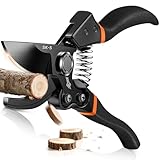
- 1. Kimura® 8" Pro Bypass Pruning Shears — Best overall
- 2. DECERK® 8.5" Professional Pruning Shears — Best budget pick
- 3. KAKURI Japanese Pruning Shears for Gardening Heavy Duty 8" — Best premium
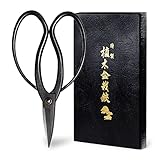
- 4. Hanafubuki Wazakura Bonsai Scissors Made in Japan 7inch — Best upgrade
- 5. TONMA JP TONMA 8.1" Pruning Shears — Best minimal setup
- Bypass pruner or bonsai scissors: which shape do you need?
- Carbon steel vs SK5: what the maintenance really costs you
- Does "made in Japan" matter, or just Japanese steel?
- The verdict
- FAQ
The best japanese pruning shears here are the Kimura 8" Pro Bypass, because they pair a stated 1 inch cut capacity with the lightest body in this group at 0.51 lb. If you want a hand-forged carbon blade and a cowhide sheath instead, the KAKURI 8" is the pick. Get this wrong and the failure mode is predictable: a pruner that crushes stems rather than slicing them, leaving ragged wounds that dry back and invite dieback on every cut you make.
Best japanese pruning shears at a glance
| Pick | Cut capacity | Blade steel | Price |
|---|---|---|---|
Best overall Kimura 8" Pro Bypass Pruning Shears |
1" claim | SK5, 60 HRC claim | Check Price |
Best budget pick DECERK 8.5" Professional Pruning Shears |
3/4" claim | Titanium-coated SK5 | Check Price |
Best premium KAKURI Japanese Pruning Shears 8" |
Not stated | Hand-forged carbon | Check Price |
Best upgrade Wazakura Bonsai Scissors 7" |
2" blade length | S58C black carbon | Check Price |
Best minimal setup TONMA 8.1" Pruning Shears |
1" claim | SK5 stainless | Check Price |



How I screened these five, and what I weighted
I compared the published specifications side by side and weighted four things, in this order.
- Stated cut capacity. This is the number that decides whether a tool suits your garden. Two listings claim a full 1 inch, one claims 3/4 inch, and two publish a blade length instead of a capacity.
- Blade steel and hardness. SK5 appears in three of the five. Two use carbon steel described as hand forged. Only Kimura publishes a hardness figure.
- Weight in the hand. Every gram matters across an afternoon of deadheading. The spread here runs from 5.5 oz to 0.55 lb.
- What comes in the box. One pick includes a leather sheath. One includes a one-hand safety lock. The rest ship bare.
I weighted capacity first because a pruner that cannot close on the wood you own is not a pruner, it is a pair of scissors. Steel came second because edge retention is what separates a tool you sharpen twice a season from one you sharpen every weekend. Weight came third and included accessories last, since a sheath is nice and a lock is useful, but neither improves a cut.
Note the keyword you searched. Amazon's results for the best japanese pruning shears mix Japanese-made tools with tools that merely use Japanese steel, and the listings here reflect that split. I have not treated "Japanese" as a guarantee of origin for any pick, only as the description each listing gives.
What actually decides a Japanese pruner? Blade steel and cut capacity
Most guides to the best japanese pruning shears lead with handle comfort. That is the wrong headline. Comfort is easy to add with rubber and hard to ruin, and every pick here claims an ergonomic grip. Steel and capacity are where the picks genuinely separate.
Cut capacity is the diameter of live wood a pruner will close on cleanly. Kimura and TONMA both claim 1 inch. DECERK claims 3/4 inch. That quarter-inch gap sounds trivial and is not: rose canes, hydrangea stems and young fruitwood cluster right at that threshold, so the 3/4 inch tool sends you back to the shed for loppers on jobs the 1 inch tools finish in place.
Blade steel decides how long the edge lasts and what rust does to it. SK5 is a high-carbon tool steel, and Kimura says its blades are heat treated to 60 HRC, the only hardness figure published across the set. DECERK adds a titanium coating and says the blade is built in three layers. KAKURI and Wazakura go the other way with plain carbon steel, hand forged, which takes a keener edge and rusts if you ignore it.
Here's the trick with capacity claims: they are manufacturer figures, tested on the maker's own wood. Treat 1 inch as the ceiling for green growth, not seasoned hardwood.
1. Kimura® 8" Pro Bypass Pruning Shears — Best overall
The lightest pruner in this group also carries the highest stated capacity and the only published blade hardness.
Best for: general garden pruning up to 1 inch, and hands that tire fast Skip it if: you want a fine bonsai cut or a leather sheath in the box
Two things put Kimura on top. First, weight: 0.51 lb is the lightest in this set, undercutting the DECERK by a small but real margin and the TONMA by a hair. Second, it is the only listing in the group to publish a hardness number. Kimura says the SK5 blades are forged in Japan and heat treated to 60 HRC, which is the figure a shopper would use to judge edge retention if every maker bothered to print it. Most don't.
The claimed 1 inch capacity matches the TONMA and beats the DECERK's 3/4 inch. Kimura describes aluminium handles under a non-slip PVC coating, riveted rather than pinned, and calls out arthritis and carpal tunnel by name. The blades are said to be PTFE coated to shed sap and resist rust.
The trade-off against the field is what's absent. There is no sheath, unlike the KAKURI, and no safety-lock feature described the way DECERK describes its one-hand lock. It is also the one buyers choose most often among the three pruners in the scissors category here, which tells you about demand, not about steel.
Pros:
- Lightest body in this comparison at 0.51 lb
- Only pick with a published hardness figure, 60 HRC claim
- Full 1 inch stated cut capacity
- PTFE blade coating claimed against sap and rust
- Aluminium handles with non-slip PVC and rivets
Cons:
- No sheath or blade cover included
- No safety lock described in the listing
- Only one seller lists it, so choice is limited
- SK5 lacks the hand-forged pedigree of the KAKURI blade
2. DECERK® 8.5" Professional Pruning Shears — Best budget pick
The cheapest pick here, and the only one with a one-hand safety lock in its feature list.

Best for: first-time buyers who want a safety lock without much outlay Skip it if: you routinely cut a full inch of live wood
This is the cheapest of the five and the fastest seller of the group by a wide margin, and it is the only pick that sits in the hedge clippers category rather than scissors. At 8.5 in it is also the longest tool here, and its 0.55 lb weight makes it the heaviest of the three bypass pruners.
The capacity is where you pay for the low price. DECERK says it prunes 3/4 inch branches, a quarter-inch short of the Kimura and TONMA claims. For perennials, herbs and light shrub work that is plenty. For established roses it is not.
What you get in exchange is the most detailed feature set in the group. DECERK describes a titanium-coated SK5 bypass blade built in three layers, a lever-action design it claims multiplies force up to 4X, anodized aluminium handles, and a safety lock that opens and closes with one hand. It also names arthritis and senior users directly, same as Kimura. Two sellers list it, the only pick in this set with more than one.
The honest limit: lever-action geometry adds moving parts, and the listing gives no hardness figure to compare against Kimura's 60 HRC claim.
Pros:
- Cheapest of the five
- One-hand safety lock for carrying and storage
- Titanium-coated SK5 blade, 3-layer construction claim
- Lever action claimed to multiply cutting force up to 4X
- Two sellers stock it
Cons:
- 3/4 inch capacity, the lowest stated here
- Heaviest bypass pruner in the set at 0.55 lb
- No published blade hardness to compare
- No sheath or blade cover included
3. KAKURI Japanese Pruning Shears for Gardening Heavy Duty 8" — Best premium
A hand-forged carbon steel blade from Sanjo with a cowhide sheath, and the only pick that arrives protected.

Best for: collectors who want a hand-forged carbon blade and a sheath Skip it if: you leave tools damp or outdoors between jobs
KAKURI is the most expensive pick here, and the reason sits in the process rather than the specification sheet. The listing says the blade is Japanese carbon steel, hand forged by blacksmiths in Sanjo, Niigata, and that every item in the range is made there. Overall length is 8 in, blade length 2.3 in, and it is the only pick that ships with a natural cowhide sheath.
Hand-forged carbon steel is the classic Japanese garden blade. It takes a finer edge than stainless and it sharpens back easily on a whetstone. It also oxidises. Leave it wet after cutting sappy growth and you will find rust, which is exactly why the sheath matters and why the PTFE and titanium coatings on the SK5 picks exist.
The gaps against the field are real. KAKURI publishes no cut capacity, so you are buying on sharpness claims rather than a number you can check against the Kimura's stated 1 inch. There is no weight figure either, and the feature text truncates mid-sentence. It is also the slowest seller of the five by a long way, and only one seller lists it.
Pros:
- Hand-forged Japanese carbon steel blade
- Only pick including a natural cowhide sheath
- Made in Sanjo, Niigata, by named craft process
- 2.3 in blade on an 8 in overall length
Cons:
- No cut capacity published anywhere in the listing
- No weight figure to compare against the other picks
- Carbon steel needs drying and oiling to avoid rust
- Most expensive pick here with the fewest published specifications
4. Hanafubuki Wazakura Bonsai Scissors Made in Japan 7inch — Best upgrade
Butterfly-handled hasami for detail work, at 5.5 oz the lightest tool in the comparison by a clear margin.

Best for: bonsai, ikebana and close detail work Skip it if: you need to cut branches thicker than a pencil
These are not bypass pruners, and that is the point. Wazakura's traditional hasami use a butterfly handle: a large looped grip sitting close to the blade, which the listing says gives better control. Measured at L180 x W95 x H17 mm, or 7.08 x 3.74 x 0.67 in, with a 2 in blade and a stated weight of 156 g, they weigh 5.5 oz. Nothing else here comes close.
Material is S58C black carbon steel, hand forged in Sanjo, Niigata, the same city as the KAKURI. Wazakura says the edge cuts wood fibres neatly so bonsai wounds heal faster, and lists ikebana, roses, fruit and vegetables as intended uses.
Skip this one if branch work is your main job. There is no stated cut capacity, and the 2 in blade with its scissor geometry is built for shoots, leaves and thin stems rather than 1 inch wood. The looped handles also demand a different grip than a spring-loaded pruner, which takes a session or two to feel natural.
This is the pick I'd add alongside a bypass pruner, not instead of one. That is the trade-off: precision at the cost of range.
Pros:
- Lightest tool in this comparison at 5.5 oz
- S58C black carbon steel, hand forged in Sanjo
- Butterfly handle sits close to the blade for control
- Full dimensions and blade length published
Cons:
- No cut capacity, unsuited to branch work
- Carbon steel requires drying after every session
- Butterfly grip needs learning if you're used to pruners
- No sheath or blade cover included
5. TONMA JP TONMA 8.1" Pruning Shears — Best minimal setup
Made in Japan, a stated 1 inch capacity, and a tightened safety clip. No extras, no bulk.

Best for: one pruner, no accessories, made in Japan Skip it if: you want the lightest tool in the group
TONMA lands in the middle on price and matches the winner where it counts most. The listing states Japanese stainless steel, described as SK5, that trims branches up to 1 inch in diameter. At 8.1 in and 0.54 lb it sits between the Kimura and the DECERK on both length and weight.
Two details set it apart. TONMA says the safety lock has been improved with a tight clip, which speaks to the common annoyance of a lock that drifts open in a pocket. And the listing puts emphasis on the cut surface itself, arguing that a smooth cut is what lets the plant keep growing. That is the right thing to care about in a pruner and it is not something most listings mention.
Where it falls short of Kimura is the specification sheet. No hardness figure, no blade coating described against sap, and no sheath. It also carries the shortest feature list of the five picks, with four bullets against Kimura's and DECERK's five, so there is simply less to compare.
The trade-off is plainly stated: you get made-in-Japan build and full capacity, and you give up the published hardness number and the lighter body.
Pros:
- Full 1 inch stated cut capacity
- Made in Japan with stainless SK5 blade
- Safety lock revised with a tighter clip
- Listing prioritises a clean cut surface for plant recovery
Cons:
- Heavier than the Kimura at 0.54 lb
- No hardness or coating figures published
- Fewest feature claims of the five picks
- No sheath and only one seller lists it
Bypass pruner or bonsai scissors: which shape do you need?
These five split into two tool types, and buying the wrong shape is the most common mistake in this category.
Bypass pruners (Kimura, DECERK, KAKURI, TONMA) have two blades that pass each other like scissors, with a spring and a sprung handle. They handle woody stems and publish a capacity in inches.
Hasami, or Japanese bonsai scissors (Wazakura) use looped handles and short blades, with no spring. They excel at soft growth, leaf trimming and precise cuts near a trunk.
If you own shrubs, roses or fruit trees, start with a bypass pruner. If you keep bonsai or arrange flowers, the hasami is the tool your hands actually want. Many gardeners end up with both, and at 5.5 oz the Wazakura adds almost nothing to a tool bag.
- Cutting wood over 1/2 inch: bypass pruner
- Trimming shoots and leaves flush: hasami
- Deadheading a mixed border: either works
- Working inside a bonsai canopy: hasami, no contest
Carbon steel vs SK5: what the maintenance really costs you
Three picks use SK5, two use hand-forged carbon. That choice sets your maintenance routine for years.
SK5 is a high-carbon tool steel that holds an edge well and takes coatings readily. Kimura claims PTFE on its blades to shed sap. DECERK claims a three-layer titanium coating for corrosion resistance. TONMA describes its SK5 as stainless. In practice, coated SK5 tolerates neglect: a wipe after use and an occasional sharpening keeps it working.
Hand-forged carbon steel, in the KAKURI and the Wazakura, sharpens to a finer edge and cuts cleaner through fibre. It also rusts. The routine is not difficult, but it is a routine:
- Wipe the blade dry immediately after cutting sappy growth
- Clean sap off with alcohol rather than water where possible
- Oil the blade before storage, camellia oil traditionally
- Sheathe or cover the blade, which is why the KAKURI's cowhide sheath earns its place
Most shoppers miss this. If your tools live in a damp shed and get put away without a wipe, buy coated SK5 and spend the difference elsewhere. If you enjoy maintaining a blade, carbon steel rewards it.
Does "made in Japan" matter, or just Japanese steel?
This is the split that makes the best japanese pruning shears a slippery search. Three of the five listings say made in Japan: KAKURI, Wazakura and TONMA. Kimura says the SK5 steel is forged in Japan without claiming the assembled tool is. DECERK describes Japanese SK5 as a material and nothing more about origin.
Neither framing is dishonest, and neither guarantees a better cut. Sanjo in Niigata Prefecture is a genuine forging centre, and both KAKURI and Wazakura name it. Whether that hand process outperforms machine-ground SK5 depends on how you use the tool, and no listing here provides a comparable test to settle it.
What I'd judge on instead:
- A published cut capacity, in inches
- A published hardness figure, if you can find one
- A weight you'll tolerate for an hour
- A blade coating, or a sheath, matched to how you store tools
If provenance matters to you personally, KAKURI states the most about its origin. If a working number matters more, Kimura publishes the most.
The verdict
The best japanese pruning shears for most gardens are the Kimura 8" Pro Bypass, because they publish more of what you can actually check than anything else here: 1 inch capacity, 0.51 lb, and a 60 HRC hardness claim no rival matches. That combination of full capacity and the lightest body carries the day.
If you prune woody shrubs and roses regularly, take the Kimura. If you keep bonsai or arrange flowers, take the Wazakura hasami at 5.5 oz. The cutoff is stem diameter: anything under about 1/4 inch is scissor work and rewards the butterfly handle, anything above it needs a bypass blade and a spring.
Two conditions flip the winner. First, if you store tools outdoors or in a damp shed, and want a sheath in the box, the KAKURI with its cowhide cover and hand-forged carbon blade is the safer buy. Second, if a one-hand safety lock matters more than a quarter-inch of capacity, DECERK is the cheapest way to get one.
TONMA's exact advantage over the Kimura is provenance: it states made in Japan for the whole tool, matches the 1 inch capacity, and tightens the safety clip. You pay a small weight penalty and lose the published hardness figure.
FAQ
Are the best japanese pruning shears worth the extra cost?
The best japanese pruning shears earn their cost when you prune often. Cleaner cuts close faster on the plant, and a blade that holds its edge means fewer sharpening sessions. On this set, the cheapest pick still claims titanium-coated SK5 and a 3/4 inch capacity, so the entry point is not high. The premium goes toward hand forging and a sheath.
How much cutting capacity do I actually need?
Cutting capacity you actually need depends on the thickest live stem in your garden. Kimura and TONMA both state 1 inch, which covers rose canes, hydrangea and young fruitwood. DECERK's 3/4 inch handles perennials and light shrubs. Anything thicker than an inch belongs to loppers or a saw, whatever a pruner listing claims.
Kimura or TONMA: which 1 inch pruner should I buy?
Kimura or TONMA comes down to specifications versus origin. Both claim 1 inch capacity and SK5 blades. Kimura is lighter at 0.51 lb against 0.54 lb, publishes a 60 HRC hardness claim, and describes PTFE coating. TONMA states made in Japan for the finished tool and an improved safety clip. Take Kimura for the numbers, TONMA for the provenance.
Will carbon steel blades rust on me?
Carbon steel blades will rust if you store them wet. The KAKURI and the Wazakura both use hand-forged carbon, which sharpens beautifully and oxidises readily. Wipe the blade dry after every session, remove sap with alcohol, and oil before storage. The KAKURI includes a cowhide sheath, which helps. Coated SK5 picks tolerate more neglect.
What's the biggest mistake buyers make in this category?
The biggest mistake buyers make is choosing the wrong tool shape. Bonsai scissors like the 7 in Wazakura, at 5.5 oz with a 2 in blade, are built for shoots and leaves, not branches. Buy them expecting to cut 1 inch wood and you will chip the edge. Match the shape to the growth first, then compare steel.
Start with the thickest stem you own and work backwards. If it clears 1/2 inch, the Kimura's stated 1 inch capacity and 0.51 lb body make it the default, and the 60 HRC claim gives you something concrete to hold the maker to. If your work lives inside a canopy rather than out on the shrub line, add the Wazakura hasami instead, since a bypass pruner cannot reach where those looped handles do. Check the current listing for whichever fits, note the weight against what your hand tolerates, and buy the one you'll reach for without thinking.