Best Planting Dates: Mixrug Jujube Leads the Set
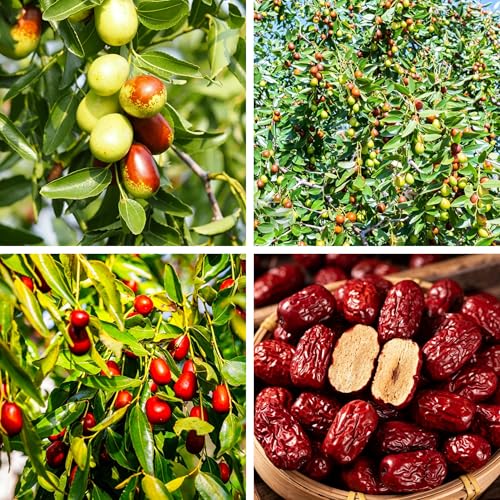
Five date and jujube listings, from a 10-seed jujube pack to a 1 lb pouch of Medjools. Which one belongs in your cart, and which ones don't.

By Taylor MontgomeryUpdated 14 min read
On this page
- Best planting dates at a glance
- How I narrowed five listings into a ranked set
- 1. Mixrug Jujube Trees Seeds — Best overall
- 2. Rancho Meladuco Organic Medjool Dates — Best premium
- 3. Natural Delights Medjool Dates — Best large-capacity
- 4. cactus.sam 15 Medjool Date Palm Seeds — Runner-up
- 5. TomorrowSeeds Tamarind Tree Seeds — Best budget pick
- Seeds or fruit: which listing actually matches your goal?
- What the listings do not tell you about germination
- When does the runner-up win instead?
- Pitfalls to avoid before you sow a single seed
- The verdict
- FAQ
The best planting dates in this set are the Mixrug Jujube Trees Seeds, a 10-seed pack in a 0.5 x 1 x 1 in envelope that ships as the cheapest tree-seed option here. If you want fruit you can eat this week instead of a tree you sow this spring, the 1 lb pouch of Rancho Meladuco Organic Medjool Dates is the pick. This roundup mixes both kinds of listing, and the shortlist below sorts them by what you actually plan to do.
Best planting dates at a glance
| Pick | What you get | Type | Price |
|---|---|---|---|
Best overall Mixrug Jujube Trees Seeds |
10 seeds 0.5 x 1 x 1 in pack |
Tree seeds | Check Price |
Best premium Rancho Meladuco Organic Medjool Dates |
1 lb resealable pouch | Whole fruit, seed in | Check Price |
Best large-capacity Natural Delights Medjool Dates |
6 oz bag | Coconut-coated date rolls | Check Price |
| 15 seeds/pits | Palm seeds | Check Price | |
Best budget pick TomorrowSeeds Tamarind Tree Seeds |
5+ seeds marked for 2026 planting |
Tree seeds | Check Price |


How I narrowed five listings into a ranked set
Five listings came in under this keyword, which is the first thing to say plainly. Three of them are seeds you sow: jujube, Medjool date palm, and tamarind. Two of them are edible dates: a 1 lb pouch of whole Medjools and a 6 oz bag of coconut-coated date rolls. Amazon's search ignored the calendar sense of "planting dates" and returned the fruit called dates instead, along with a couple of unrelated tree-seed packs. That is what you have to work with, so the ranking follows what each listing actually is.
The criteria I weighted, in order:
- What the listing gives you, measured in a supplied specification (count, weight, or seed quantity).
- How the pack sits against the other four on price position.
- How specific the listing is about what arrives in the envelope or pouch.
- Whether the manufacturer's own bullets contradict each other or leave obvious blanks.
Two picks were held back rather than cut. The tamarind seeds carry a "for 2026 planting" note on the listing itself, which is a real detail worth reading before you buy. The cactus.sam listing warns of a 1 to 4 week dispatch window in its own bullets, and that is the kind of thing that changes whether it belongs in your cart this weekend.
1. Mixrug Jujube Trees Seeds — Best overall
A 10-seed jujube pack, the second-cheapest listing in this set, and the only one that pairs a seed count with actual pack dimensions.
Best for: home growers who want ten seeds of one fruit tree in a tiny pack Skip it if: you want to eat dates this year, not grow them
Jujube is often called the red date or Chinese date, so if a search for the best planting dates surfaced this listing, that is why. What sets it apart in the set is specificity. The pack lists ten seeds and gives dimensions of 0.5 x 1 x 1 in, which is a genuine envelope of seeds rather than a vague count. Mixrug's own bullets claim the seeds "adapt to most climates", describe them as drought-tolerant, and call the tree low-maintenance for beginners. Treat those as the seller's claims, not a soil report on your yard.
Against the other tree-seed packs here, the jujube listing gives you more seeds than the tamarind pack, at a lower price position than the cactus.sam palm pits, in a category page with a healthier sales rank than either. That is a lot of the case for it. The trade-off: like every seed pack, it commits you to years of growing before you taste a fruit.
Pros:
- Ten seeds specified per pack
- Cheapest tree-seed pack after the tamarind
- Small 0.5 x 1 x 1 in envelope, easy to store
- Sells faster than the other seed listings in this set
- Manufacturer claims drought tolerance and broad climate range
Cons:
- Only two published specifications
- No stated germination rate figure
- No warranty or guarantee listed
- Years to fruit, like any tree from seed
2. Rancho Meladuco Organic Medjool Dates — Best premium
A 1 lb resealable pouch of whole California-grown Medjools, the most expensive pick here, and the pouch to buy if you want fruit rather than seeds.

Best for: bakers and snackers who want a full pound of whole Medjools Skip it if: you want seeds to sow, not fruit to eat
This is the listing to reach for when the best planting dates you actually want are the edible kind, packed for baking and snacking. Rancho Meladuco publishes three matching specifications: a 1 lb resealable pouch, a count of 1, and a weight of 1 lb. The listing describes the dates as whole, with the seed still inside, and Rancho Meladuco says they are hand-picked in California's Coachella Valley on a family-run, women-owned farm with no sugar or preservatives added.
Compared to the other fruit pick in the set, this pouch runs at roughly two and a half times the weight of the Natural Delights bag, which is why it lands in the premium price position. The pouch resealing matters if you plan to bake through it over a couple of weeks rather than eat it in one sitting. The catch: with the pit inside every date, you pit them yourself before they go into a smoothie or an energy bite.
Pros:
- 1 lb pouch, the largest weight in this set
- Resealable stand-up pouch
- USDA organic per the listing
- Whole dates suit baking and date paste
- Two sellers listed, not one
Cons:
- Most expensive pick in the set
- Seed still inside each date
- No count of individual dates published
- Not a seed pack, so useless if you want to grow
3. Natural Delights Medjool Dates — Best large-capacity
A 6 oz bag of coconut-coated Medjool date rolls, sitting in the middle price band, and the only pick here that treats dates as a finished snack.

Best for: snackers who want a coconut-coated date roll in a resealable bag Skip it if: you need a full pound for baking
The "large-capacity" label here is about the format, not the weight: this is a 6 oz bag of Coconut Mini Medjools, not a 1 lb pouch of whole fruit. Natural Delights describes them as moist date rolls coated in coconut flakes, grown in Bard Valley, and marketed as a ready-to-eat snack rather than a baking ingredient. The listing publishes three specifications: 6 oz size, count of 1, and 6 oz weight. That is the same triple the premium pouch offers, at a lower price position.
Within this set of five, its role is narrow but clear. It is the only listing that has already done the pitting, the rolling, and the coating for you, and the coconut flakes push it toward dessert rather than pantry. Natural Delights says the dates are hand-picked with no pesticides, additives, or GMOs. The obvious trade-off against the Rancho Meladuco pouch is weight: a 6 oz bag will not carry you through a batch of energy bites, and it costs you the option to make date paste from scratch.
Pros:
- Ready-to-eat, no pitting required
- Coconut coating makes it a dessert-style snack
- Two sellers listed
- Sells faster than three of the other picks here
- Natural Delights claims no pesticides, additives, or GMOs
Cons:
- Only 6 oz per bag
- Not suitable as a baking staple at this weight
- Coating limits how you use them in recipes
- No pack-of-multiple option in this listing
4. cactus.sam 15 Medjool Date Palm Seeds — Runner-up
Fifteen Medjool date palm pits, the slowest seller in this set, and the only listing that names the botanical species on the label.

Best for: growers who specifically want Medjool date palm pits, 15 to a pack Skip it if: you want fast shipping or a quick sprout
If your version of the best planting dates means the actual date palm, Phoenix dactylifera, this is the listing that names it. cactus.sam lists 15 pits per pack. That is the highest seed count in the set, more than the ten in the jujube envelope and the five in the tamarind pack. The listing also warns, in its own bullets, that dispatch typically takes one to four weeks after ordering, which puts it behind the other seed picks on how quickly you can start.
The reason it sits at runner-up rather than the top slot is what the listing does not say. There is one published specification, a count of one, which refers to the pack rather than the seeds. There is no germination figure, no size, no dimensions, and no origin claim beyond the name. Compared to the jujube pack, you get more seeds and a named species, but you give up almost every other data point. For a serious date palm grower that is a fair trade; for a first-time seed buyer it is not.
Pros:
- Fifteen pits per pack, most in this set
- Species named as Phoenix dactylifera
- The only true date palm seed listing here
- Entry price on a per-seed basis
- Manufacturer describes item condition as new
Cons:
- Slowest seller in this set
- Dispatch note of 1 to 4 weeks
- Only one published pack specification
- No germination or origin figures
- Only one seller listed
5. TomorrowSeeds Tamarind Tree Seeds — Best budget pick
Five-plus tamarind seeds, the cheapest listing in the set, and the only pack the seller explicitly marks for the 2026 season.

Best for: warm-climate gardeners who want a tamarind tree, marked for 2026 planting Skip it if: you live somewhere with real winters
The tamarind is often called the Indian date, which is why this listing turned up. TomorrowSeeds publishes one specification, a 5+ count, and prints "for 2026 planting" directly in the product title. That last detail is unusually honest for a seed listing and it is exactly what the best planting dates conversation is about: when the seeds are graded to go in the ground. Read the listing carefully to confirm which season the pack you receive is graded for.
TomorrowSeeds claims the tree is hardy and drought-tolerant in warm climates, produces tangy fruit for cooking, and can be pressed into homemade tamarind paste or sauce. Treat those as the seller's descriptions. Where this pack shines against the rest of the seed picks in the set is price: it is the cheapest listing here, full stop. Where it loses: five-plus seeds is fewer than the ten in the jujube pack and the fifteen in the palm pit pack, and tamarind is a tropical tree that will not survive an outdoor winter in most of the continental United States.
Pros:
- Cheapest listing in the whole set
- Season graded on the pack itself
- Named species, Tamarindus indica
- Manufacturer claims drought tolerance
- Evergreen foliage described in the listing
Cons:
- Only 5+ seeds
- Tropical, so hardiness zones limit outdoor planting
- Vague count ("5+" rather than a firm number)
- Only one seller listed
- No dimensions or weight published
Seeds or fruit: which listing actually matches your goal?
The five listings in this set split cleanly into two piles, and the pile you belong in decides most of the picks below.
Sow-it-yourself pile:
- Mixrug Jujube, 10 seeds, small envelope, second-cheapest in the set.
- cactus.sam Medjool Palm, 15 pits, species named, dispatch takes 1 to 4 weeks.
- TomorrowSeeds Tamarind, 5+ seeds, marked for 2026, the cheapest listing here.
Eat-it-now pile:
- Rancho Meladuco, 1 lb pouch of whole Medjools, seed inside, most expensive here.
- Natural Delights, 6 oz bag of coconut-coated date rolls, resealable.
If you want a tree in the ground next spring, ignore the eat-it-now pile entirely. If you want to bake with dates on Saturday, ignore the seed pile. The one crossover case is the Rancho Meladuco pouch: whole dates keep their seeds, and some growers do try to sprout Medjool pits from an eating pouch. That works less reliably than a graded seed pack, so the cactus.sam listing is the honest choice for that goal.
What the listings do not tell you about germination
None of the three seed listings publishes a germination rate figure. Mixrug claims "high germination rate" in a bullet without a number. cactus.sam says nothing on the subject at all. TomorrowSeeds prints "for 2026 planting" but no percentage. That is normal for consumer seed packs on Amazon, and it is the single biggest data gap in this roundup.
What you can read from the listings, and what you cannot:
- You can read the seed count. Ten for jujube, fifteen for palm pits, five-plus for tamarind.
- You can read the packed dimensions in the case of the jujube envelope, 0.5 x 1 x 1 in.
- You cannot read how old the seeds are, how they were stored, or what percentage will sprout.
- You cannot read what soil temperature or moisture the seller assumes.
The practical response is to buy the pack with the highest seed count that suits your species goal, so that a middling germination rate still leaves you with a viable tree or two. That points at the palm pits for date palm goals, the jujube for red-date-style fruit, and the tamarind only if you live somewhere warm enough for it.
When does the runner-up win instead?
The best planting dates for a serious date palm grower are not the jujube. They are the cactus.sam palm pits, for one reason: species. Phoenix dactylifera is the real date palm, and it is the only listing here that puts that name on the label. The winner earned its spot on breadth of published data and price position, but breadth does not help you if the species is wrong.
Pick the runner-up over the jujube when all three of these are true:
- You specifically want a date palm rather than a jujube or a tamarind.
- You can wait one to four weeks for dispatch, per the listing's own note.
- You are comfortable with a listing that publishes almost no data beyond the count.
Pick the tamarind over the jujube when you live in a warm-winter climate and specifically want an Indian date tree for its pods rather than a red-date fruit. Pick either fruit pouch over any seed pack when you want to eat dates this month.
Pitfalls to avoid before you sow a single seed
A few traps show up again and again in this kind of listing set, and they are worth naming so you can dodge them.
- Confusing the fruits. Red dates (jujube), true dates (Phoenix dactylifera) and Indian dates (tamarind) are three different trees. The word "date" in a title does not mean they are related, and they are not interchangeable in a recipe or a garden.
- Ignoring the season note. TomorrowSeeds prints "for 2026 planting" on the tamarind listing. That is a real detail, not marketing. Read it.
- Assuming pits from eating dates will sprout reliably. Whole dates like the Rancho Meladuco pouch keep their seeds, but they are not graded seed packs. A graded pack from a seed seller is the safer route for germination.
- Overpaying for a small snack pack when you meant to bake. The Natural Delights bag is 6 oz. The Rancho Meladuco pouch is 1 lb. If you needed the pound, do not buy the bag twice.
- Trusting bullet claims as measured facts. Every "drought-tolerant" and "high germination rate" line in this set is the seller's own wording, not a lab result.
The verdict
For a shopper searching for the best planting dates, the winner is the Mixrug Jujube Trees Seeds. It gives you ten seeds in a 0.5 x 1 x 1 in envelope, sits at the second-lowest price position in the set, publishes more identifying detail than the palm pits, and covers the most common home-garden case: growing a hardy fruit tree from a small pack.
If your goal is a true date palm rather than a red date, the cactus.sam Medjool Date Palm Seeds are the runner-up and, for that specific goal, the better buy. They name the species and pack fifteen pits per order. The trade-off is a dispatch window of one to four weeks and a listing that publishes almost no other data.
If your goal is eating dates rather than growing them, both fruit listings win in their lane. The Rancho Meladuco 1 lb pouch is the pick for baking, energy bites and date paste. The Natural Delights 6 oz bag is the pick for a ready-to-eat coconut-coated snack. The tamarind seeds are the cheapest listing here and the right buy only for warm-climate gardeners who specifically want an Indian date tree.
FAQ
Are best planting dates the same as calendar planting windows?
Best planting dates in this roundup refer to the products Amazon returned for that search, not calendar advice. The five listings split into three seed packs (jujube, Medjool palm, tamarind) and two edible date products. If you were looking for a frost-date calendar or a regional sowing chart, this article is not that; you want an extension-service guide for your zip code instead.
Is a Medjool date seed pack worth it over supermarket date pits?
A Medjool date seed pack is worth it when germination and species matter. The cactus.sam listing sells 15 pits described as Phoenix dactylifera, packed as seeds for planting. Pits from an eating pouch like Rancho Meladuco are the same species biologically, but they are not stored, graded, or dispatched as seeds. For a serious grower, a dedicated pack is the safer buy.
How many seeds do the tree packs in this set actually include?
The tree packs in this set publish three different seed counts. Mixrug lists ten jujube seeds. cactus.sam lists fifteen Medjool date palm pits. TomorrowSeeds lists "5+" tamarind seeds, which reads as at least five without a firm ceiling. That makes the palm pits the highest count, the jujube the middle, and the tamarind the smallest published pack in the roundup.
Rancho Meladuco or Natural Delights: which date pouch wins?
Rancho Meladuco or Natural Delights depends entirely on how you plan to use the dates. Rancho Meladuco is a 1 lb resealable pouch of whole Medjools with the seed inside, aimed at baking, smoothies and date paste. Natural Delights is a 6 oz bag of coconut-coated Medjool rolls, aimed at snacking. For volume and versatility, Rancho Meladuco wins; for a ready-made treat, Natural Delights.
What is the single biggest pitfall with seed listings like these?
The single biggest pitfall with seed listings is treating three different trees as one. Jujube is the red date, Phoenix dactylifera is the true date palm, and tamarind is the Indian date. They need different climates, timelines and care. Buying jujube seeds when you wanted a date palm, or tamarind when you live somewhere cold, is the most common and expensive mistake in this category.
Before you close the tab, decide which pile you belong in: the sow-it pile or the eat-it pile. If you are sowing, the Mixrug Jujube pack is the sensible default because it publishes more detail than the palm pits and costs less than the other two seed listings on a per-seed basis you can actually verify. If you are eating, the Rancho Meladuco pouch is a full pound of whole Medjools, and the Natural Delights bag is the ready-made snack for the days you do not want to pit anything. Read the season note on any seed pack before you order.